Puppy Vaccination Schedule: A Complete Timeline
Vaccinations protect your puppy from diseases that are still common — and still deadly. The first few months follow a rough pattern most owners recognise, but the exact timing depends on where you live and which products your vet uses. This guide walks you through the typical timeline so you know what to expect, then hands the final word to the only person who should set the schedule: your own vet.
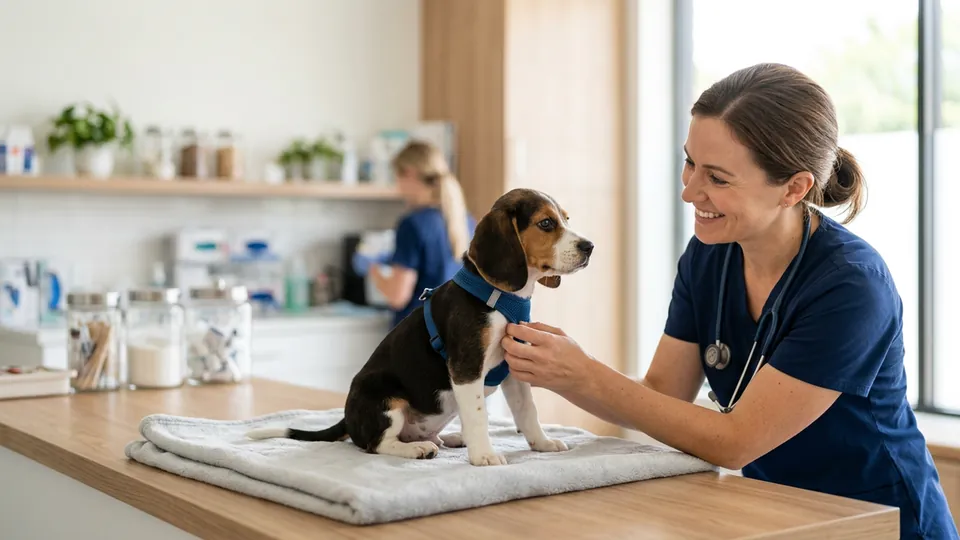
A Quick, Important Note
This is a general guide, not medical advice. Vaccination schedules genuinely differ from one country to the next, and even between practices in the same town — they vary by the diseases that are common in your area, the vaccine brands your vet stocks, and your individual puppy's risk and health.
Everything below is framed as a typical range, not a fixed rule. Always follow the plan your own vet sets for your puppy. If anything here differs from what your vet has told you, your vet is right — they know your dog, your region, and the products in front of them.
Tip: Book your puppy's first vet visit within a few days of bringing them home, even if vaccinations have already started. Your vet will confirm exactly which jabs are due, and when, for your part of the world.
Core vs Non-Core Vaccines
Vets split vaccinations into two groups. Understanding the difference helps the conversation with your vet make sense.
- Core vaccines are recommended for essentially every dog because the diseases are widespread, severe, or a risk to people. These typically cover distemper, infectious hepatitis (adenovirus) and parvovirus — often bundled together and shortened to "DHP". Rabies is also a core vaccine in many regions, and is legally required in some countries and for international travel.
- Non-core (lifestyle) vaccines are chosen based on your puppy's risk. Common ones include leptospirosis, kennel cough (Bordetella and parainfluenza) and, in some areas, Lyme disease. Whether your puppy needs these depends on where you live, where you walk, and whether they will mix with other dogs at classes, kennels or daycare.
Your vet will recognise which non-core vaccines make sense for your puppy's lifestyle. There is no single correct answer — a city puppy and a farm puppy may need different protection.
The Typical Puppy Timeline
Most puppies start their course at around six to eight weeks old and finish a few weeks later. The breeder may have given the first vaccination before you collected your puppy, so bring any paperwork to your first appointment. Here is a typical pattern — yours may differ:
| Puppy's age | Typically given |
|---|---|
| 6–8 weeks | First core vaccination (DHP — distemper, hepatitis, parvovirus). Often given by the breeder. |
| 10–12 weeks | Second core vaccination, sometimes with leptospirosis depending on region. |
| 14–16 weeks | Final puppy vaccination (completing DHP/parvovirus cover), plus rabies where it is required or recommended. |
| Around 12 months | First adult booster, given roughly a year after the puppy course. |
Vets vary on the exact weeks, the number of visits, and which extras are included at each stage — treat the table as a guide to the shape of the course, not a prescription. Your vet will give you precise dates.
Never Miss a Booster
Add your puppy's birthdate and PupPlan builds an auto-generated care plan that schedules vaccine, worming and flea/tick reminders tailored to their age — so the next jab never slips your mind. Track vet visits, log weight on growth charts, and keep every record in one place.


When Can My Puppy Go Outside?
This is the question almost every new owner asks. As a typical rule, puppies can walk freely in public spaces around one to two weeks after their final puppy vaccination — but always confirm the exact date with your vet, because it depends on the vaccines used.
The hard part is that this overlaps with the socialisation window, the short period in early puppyhood when your puppy most readily learns that the world is safe. Keeping a puppy shut indoors until they are fully covered can cost you that window and lead to fear or reactivity later. The goal is to socialise safely rather than not at all:
- Carry your puppy out and about so they see, hear and smell the world without touching risky ground.
- Use clean, private gardens you know other dogs haven't toileted in.
- Arrange meetings with healthy, fully vaccinated dogs belonging to people you trust.
- Attend well-run puppy classes that require proof of vaccination from every attendee.
Balancing disease risk against the socialisation window is exactly the kind of judgement your vet can help you make for your area.
Adult Boosters
Protection from the puppy course doesn't last forever. After the first adult booster at around a year old, your dog moves onto a maintenance schedule alongside an annual health check — a useful chance for your vet to catch problems early, even in the years when fewer vaccinations are due.
Not every vaccine is given every year. Some components are typically boosted annually, while others provide longer protection and may be given every three years. Titre testing — a blood test that measures existing antibody levels — is one option some owners discuss with their vet to help decide what is needed and when. There is no one-size-fits-all answer, so let your vet tailor the booster plan to your dog.
Don't Forget Worming & Flea/Tick
Vaccinations are only part of keeping a puppy healthy. Parasite control runs alongside them and follows its own rhythm.
- Worming happens frequently in early puppyhood — young puppies are typically wormed every couple of weeks at first — before settling into a routine schedule as they grow.
- Flea and tick prevention depends heavily on your region, the season, and how much time your dog spends in long grass or woodland. Some areas need year-round cover; others are more seasonal.
Products, formats and timing vary a lot, and not every product suits every age or weight of puppy. Confirm which treatments to use, and how often, with your vet rather than picking something off a shelf.
Tip: Worming and flea treatments are easy to lose track of because they repeat on their own cycle, separate from vaccinations. A recurring reminder keeps the whole routine on schedule.
Keeping Track
Between vaccinations, boosters, worming and flea treatments, a puppy's first year carries a lot of dates — and you'll be asked to prove them. Boarding kennels, daycare, puppy classes, groomers and international travel all commonly require an up-to-date vaccination record before they'll take your dog.
Keeping everything in one place saves you hunting through paperwork and, more importantly, stops anything slipping through the cracks. PupPlan's auto-generated care plan schedules vaccine, booster, worming and flea/tick reminders from your puppy's birthdate, while vet visit tracking and weight growth charts keep the full picture together. Your vet still sets the plan — the app just makes sure you never miss a date in it.
Things Owners Get Wrong
- Treating online schedules as gospel. Timings vary by country and product. The schedule that matters is the one your vet writes for your puppy.
- Keeping the puppy completely indoors "to be safe". Total isolation protects against disease but risks lasting fear problems. Socialise safely instead.
- Letting a booster lapse and guessing. If a dose is missed, call your vet — don't assume the course can simply continue where it left off.
- Forgetting worming and flea treatments. They run on their own cycle and are easy to overlook once the vaccination visits are done.
- Losing the paperwork. You'll need proof of vaccination for boarding, classes and travel — keep a single, current record.
Frequently Asked Questions
How much do puppy vaccinations cost?
It varies widely by country, region and clinic, so the only reliable figure is the one your own vet gives you. Ask for a full course quote when you book. Many practices offer puppy or health plans that spread vaccinations, worming and check-ups across the year for a fixed monthly fee, which can work out cheaper than paying per visit.
Can I take my unvaccinated puppy outside at all?
Yes, carefully. Carry your puppy to see the world, visit clean private gardens, and meet healthy, fully vaccinated dogs you trust. Avoid public parks and pavements where unknown dogs toilet until your vet says it's safe. The socialisation window is short, so don't waste it — just balance it against disease risk and confirm the approach with your vet.
What happens if I miss a booster?
Don't guess — call your vet. Depending on how much time has passed and which vaccine is involved, they may give a single catch-up dose or need to restart part of the course. Book in as soon as you realise a booster has been missed.
Are annual boosters necessary?
It depends on the vaccine and where you live. Some components are typically given yearly; others last longer and may be given every three years. Titre testing is one option to discuss with your vet. The right schedule is a conversation to have with the vet who knows your dog's history and local risks.