New Puppy Checklist: Your First Week Together
Bringing a puppy home is one of the best days you'll have — and a little preparation makes it calm instead of chaotic. This checklist walks you through exactly what to buy, how to puppy-proof, what to expect on the first day and night, the vet and vaccination basics, and how to make the most of the precious early socialisation window. Take a breath: you've got this.
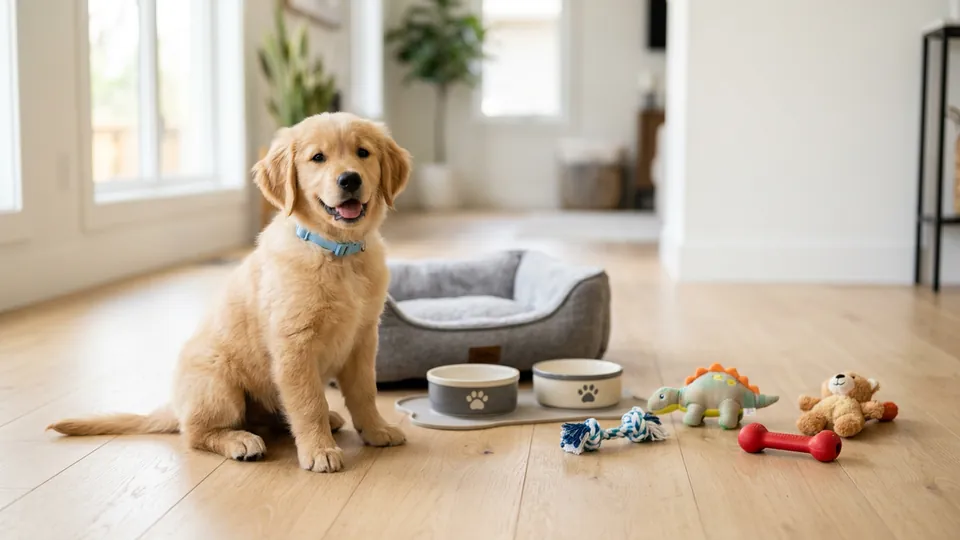
The Shopping Checklist
You need less than the pet shop will try to sell you. Get the essentials sorted before pickup day so your puppy walks into a home that's ready for them — you can fill the gaps once you know their preferences.
- ☐ Crate and a soft bed — sized so your puppy can stand, turn and stretch out. A crate becomes their safe den, not a cage.
- ☐ Playpen or stair gates — to give them a safe, puppy-proofed zone and block off rooms you're not ready to supervise.
- ☐ Flat collar, ID tag, harness and lead — a well-fitted harness is kinder on a growing neck than pulling against a collar.
- ☐ The same food your breeder uses — buy a bag of exactly what they've been eating to avoid a tummy upset (more on switching later).
- ☐ Food and water bowls — stainless steel or ceramic wipe clean easily and don't harbour odours.
- ☐ Enzymatic cleaner — non-negotiable for accidents. It breaks down the scent so your puppy isn't drawn back to the same spot.
- ☐ Age-appropriate chews and toys — a few soft toys and safe puppy chews to soothe sore gums and redirect mouthy behaviour.
- ☐ Grooming basics — a brush suited to their coat, puppy-safe shampoo, and nail clippers to start handling early.
- ☐ Poo bags — plenty of them. You'll be amazed.
Tip: Resist the urge to buy a wardrobe of gear in week one. Puppies grow fast and develop firm opinions about toys and beds — start minimal, then add what actually works for your dog.
Puppy-Proof Your Home
A new puppy explores the world with their mouth, and they're quick. Get down to their eye level in each room and look for trouble before they find it.
- ☐ Tuck away or cover electrical cables and chargers — tempting to chew and genuinely dangerous.
- ☐ Remove or raise toxic plants (lilies, sago palm, many houseplants) and keep toxic foods — chocolate, grapes, raisins, onions, xylitol — well out of reach.
- ☐ Pick up small swallowable objects: socks, children's toys, coins, hair ties, rubber bands.
- ☐ Secure bins with a lid or behind a cupboard door — kitchen and bathroom bins are a magnet.
- ☐ Block stairs with a gate to protect soft puppy joints and prevent tumbles.
- ☐ Stow away cleaning products and medicines in latched, high cupboards.
The First Day
Your puppy has just left everything familiar. Keep the energy low and let them set the pace — a calm arrival sets the tone for the weeks ahead.
- Arrive calmly. Carry your puppy from the car to your chosen toilet spot in the garden and give them a quiet moment to take it all in.
- Toilet spot first. Let them sniff and toilet, and praise warmly the instant they go — you're starting toilet training in minute one.
- One room to explore. Open up a single puppy-proofed room rather than the whole house. Too much space is overwhelming.
- Skip the welcome party. However excited everyone is, hold off on a stream of visitors today. A handful of calm, quiet introductions is plenty.
- Show them the crate. Toss a treat inside and let them wander in and out freely so the crate feels like a good place from the start.
The First Night
The first night is often the hardest, and a bit of crying is completely normal — your puppy has never slept alone before. Be kind to both of you and keep expectations gentle.
- ☐ Place the crate near your bed. Hearing and smelling you is hugely reassuring. You can gradually move it to its permanent spot over the coming weeks.
- ☐ Expect a toilet trip or two. Tiny bladders can't last all night yet. Take your puppy out calmly, with minimal fuss, then straight back to bed.
- ☐ Keep night-time low-key. No play, no bright lights, no chatter — quiet praise for toileting, then settle them down again.
- ☐ Comfort, don't reward panic. Soothing whimpers is fine; a full reassurance party teaches your puppy that noise summons you. Calm and boring wins.
For a step-by-step plan that makes the crate a place your puppy loves, see our dedicated crate training a puppy guide.
Vet, Vaccines & Worming
A few health basics in the first week protect your puppy and give you peace of mind. Your vet is your partner here — book them in early and ask plenty of questions.
- ☐ Book a first health check within the first few days. Your vet will give your puppy a once-over and set up everything below.
- ☐ Vaccination course — puppies need a series of jabs to build immunity, with timing that depends on the vaccine used. Your vet will set the exact dates.
- ☐ Worming and flea/tick treatment — puppies are wormed regularly when young, then on an ongoing schedule. Confirm the products and intervals with your vet.
- ☐ Microchipping — required by law in many places and the best way to be reunited if your puppy is ever lost. Keep your contact details up to date.
- ☐ Pet insurance — sorting cover early, before any condition can be called pre-existing, is well worth doing.
Treat the specifics — dates, products and doses — as something to confirm with your vet rather than guess at. For the full picture, read our puppy vaccination schedule guide.
Start Your Puppy's Plan on Day One
Enter your puppy's birthdate and PupPlan builds an auto-generated care plan with smart reminders for vaccines, worming and flea/tick treatment — so nothing slips. Log each weigh-in to watch their growth chart fill out, and follow the New Dog course to get training off to a confident, force-free start.


The Socialisation Window (Do This Now)
Here's the part that's genuinely time-sensitive. Puppies have a critical socialisation window that closes around 16 weeks of age. Positive experiences during this period shape a confident, easy-going adult dog — and you can't get this time back, so start straight away.
There's a balance to strike, because your puppy isn't fully vaccinated yet. The answer isn't to wait — it's to socialise safely:
- ☐ Carry your puppy out into the world. Hold them in your arms or a sling to let them watch traffic, crowds, buggies and bicycles from a safe height, off the ground.
- ☐ Introduce new sounds gently. Hoovers, doorbells, thunder, fireworks — pair each at low volume with treats and calm. PupPlan's desensitization sound library is built for exactly this.
- ☐ Cover lots of surfaces and handling. Let them walk on grass, tile, gravel and wobbly things, and gently handle paws, ears and mouth so vet visits feel normal.
- ☐ Meet calm, healthy, vaccinated dogs in safe settings — a friend's well-mannered adult dog in your garden is ideal.
- ☐ Meet a variety of people — different ages, heights, hats, beards, wheelchairs — always at your puppy's own pace.
Two rules keep this positive: quality over quantity, and never force it. One good, relaxed experience beats ten overwhelming ones, and if your puppy looks worried, add distance and let them choose to approach. Confirm the right timing for ground walks with your vet.
Tip: Keep a short list of things to expose your puppy to each week — sounds, surfaces, people, gentle handling — and tick them off. A little every day, always positive, builds a resilient dog for life.
Start a Simple Routine
Puppies thrive on predictability. A loose, consistent rhythm helps with toilet training, settles nerves and makes your days far easier. Keep it simple:
- ☐ Regular feeding times — puppies usually eat three to four small meals a day at set times, which also makes toileting predictable.
- ☐ A toilet schedule — out first thing, after every meal, after every nap, after play and before bed. Praise every success.
- ☐ Short play and rest cycles — a little activity, then enforced quiet. Remember puppies need 18 to 20 hours of sleep, so protect nap time fiercely.
- ☐ Begin name and recall games — say their name, reward eye contact; back away a step and reward them for following. Make coming to you the best game in the house.
The Potty Training course inside PupPlan walks you through the toilet schedule in detail, and the Training Journey turns those daily five-minute sessions into XP, levels and a streak you'll want to keep.
Common Mistakes
- Over-buying gear. Start with the essentials; your puppy will tell you the rest. Half of it ends up unused.
- Switching food on day one. Keep the breeder's food at first and transition gradually — a sudden change plus a stressful move equals an upset tummy.
- Wasting the socialisation window. Waiting until vaccinations are complete to socialise misses the critical period. Socialise safely by carrying your puppy and inviting calm dogs to you.
- Letting an overtired puppy run riot. Biting and zoomies almost always mean too little sleep, not too little exercise. Step in with quiet rest.
- Too much, too soon. A house full of excited visitors on day one overwhelms a puppy. Keep the first days calm and small.
- Skipping the early vet visit. Booking that first check sets up vaccines, worming and microchipping on the right timeline — don't put it off.
Frequently Asked Questions
What do I actually need before bringing a puppy home?
Just the essentials: a crate and bed, a playpen or stair gates, a collar with ID tag plus a harness and lead, the food your breeder has been using, two bowls, an enzymatic cleaner, a few age-appropriate chews and toys, basic grooming kit, and poo bags. Don't overbuy — your puppy grows fast and you'll learn their preferences quickly, so wait before stocking up.
When can my puppy go outside or meet other dogs?
Wait until your puppy is fully covered by their vaccinations before walking on the ground in public or meeting unknown dogs — confirm the timing with your vet. Meanwhile, don't lose the socialisation window: carry your puppy out to see the world safely, and invite calm, vaccinated dogs to your home.
How much sleep does a puppy need?
A lot — usually 18 to 20 hours a day. Like toddlers, overtired puppies wind up rather than slow down, which shows as nipping and zoomies. If your puppy gets bitey and silly, the fix is almost always more rest, not more activity.
Should I change my puppy's food straight away?
No. Moving home is enough change already, so keep the same food your breeder used at first. If you want to switch, do it gradually over roughly one to two weeks, mixing in a little more of the new food each day.