Caring for a Senior Dog: A Complete Guide
The grey muzzle, the slower mornings, the longer naps in the sun — watching your dog grow old is bittersweet. But the senior years can be some of the most rewarding you share, and good care makes a real difference to how comfortable and happy your dog stays. The single most useful mindset: don't write changes off as "just old age." Much of what looks like ageing is treatable, and the earlier you spot it, the more you can do.
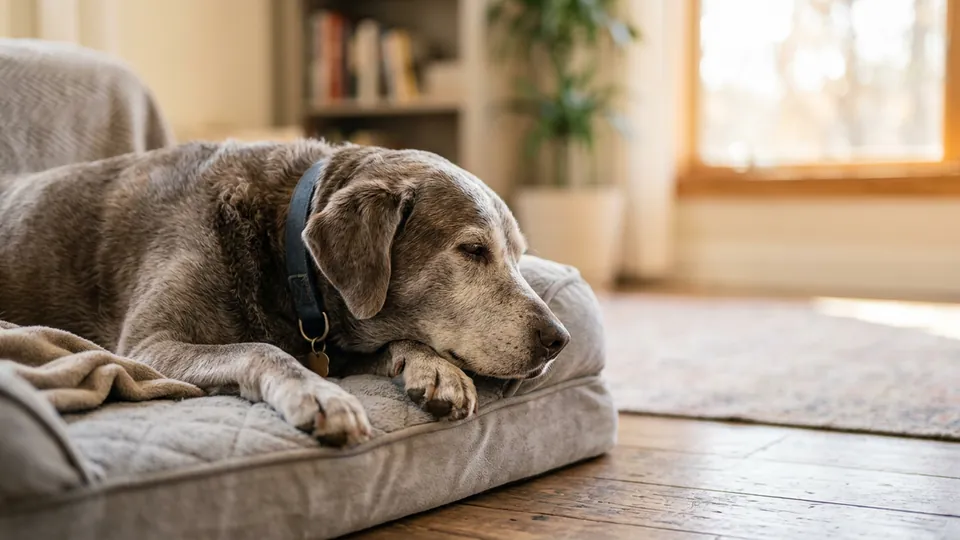
When Is a Dog "Senior"?
There's no single birthday when a dog flips from adult to senior. It's a gradual stage, not a switch — and it arrives at very different ages depending on size and breed. As a rough guide:
- Giant breeds (Great Danes, Mastiffs) may be considered senior from around six years old.
- Large breeds tend to reach it around seven to eight.
- Small and toy breeds often aren't senior until nine or ten, and many live happily well beyond that.
Bigger dogs simply age faster than smaller ones, so a seven-year-old Labrador and a seven-year-old Chihuahua are at very different life stages. Your vet is the best person to tell you where your individual dog sits — and that conversation is worth having before any problems appear, so you know what "normal" looks like for your dog.
Health Changes to Watch For
Ageing dogs change slowly, which makes it easy to miss things when you see your dog every day. It helps to know what to look out for so you can flag it early. Keep an eye on:
- Mobility and stiffness — trouble getting up, hesitating at stairs, reluctance to jump into the car, or a stiff first few steps after rest.
- Weight changes — gradual gain as activity drops, or unexplained weight loss, which always deserves a vet's attention.
- Dental disease — bad breath, sore gums, or eating more slowly. Dental pain is one of the most common and most under-treated problems in older dogs.
- Lumps and bumps — new or changing lumps should be checked promptly rather than watched indefinitely.
- Vision and hearing loss — bumping into things, not responding to their name, or being startled when approached.
- Toileting changes — drinking more, accidents indoors, or straining can all signal underlying conditions.
- Behaviour and cognitive changes — disrupted sleep, pacing, confusion, or seeming "lost" in familiar rooms.
Here's the most important point in this whole guide: "slowing down" is very often treatable pain, not simply old age. Arthritis, dental disease and other conditions creep in quietly, and dogs are masters at hiding discomfort. If your dog seems less themselves, please don't assume nothing can be done — see your vet, who can diagnose the cause and discuss what will help.
Tip: Take a short video on your phone when your dog is moving normally now. If they start to slow down later, a "before" clip gives your vet far more to work with than "he seems a bit stiff lately."
See the Vet More Often
Younger dogs usually manage fine with an annual check-up. Senior dogs benefit from being seen about twice a year. Time compresses as dogs age — a lot can change in twelve months — and many serious conditions are far easier, cheaper and kinder to treat when they're caught early.
Ask your vet about baseline blood and urine tests while your dog is still well. A healthy baseline gives them something to compare against later, so subtle shifts in kidney, liver or thyroid function show up before your dog ever looks unwell. Keeping a record of weight, appetite, water intake and any new symptoms between visits makes those appointments far more productive — you can show your vet a trend rather than relying on memory.
Joints & Mobility
Joint pain is one of the biggest quality-of-life issues for older dogs, and one of the most manageable. The first step is always a vet assessment: pain management should be vet-guided, and you should never give human painkillers, which can be dangerous or fatal for dogs. Once your vet has a plan, there's a lot you can do at home to make life easier:
- Ramps and steps for getting into the car or onto the sofa, so your dog isn't jumping onto sore joints.
- Non-slip rugs or runners across slippery floors — splaying legs on laminate is both painful and frightening for a stiff dog.
- Soft, supportive bedding, ideally orthopaedic, in a warm, draught-free spot.
- Short nails, which keep the feet at a comfortable angle and improve grip. Overgrown nails change how a dog stands and walks.
- Gentle, consistent exercise to keep muscle and joints working — little and often beats one big weekend walk.
Weight & Diet
Keeping your senior dog lean is one of the kindest, cheapest things you can do for ageing joints. Every extra kilo means more load on hips, knees and elbows that are already feeling their age, and excess weight is linked to a range of other health problems too. As activity naturally tapers off, many dogs need fewer calories than they did in their prime.
Some older dogs do well on a senior or lighter formula, while others need a portion adjustment rather than a new food entirely. If your dog has a specific condition, your vet may recommend a prescription diet — always discuss any change of food, portions or supplements with them before switching, because the wrong diet can do more harm than good. For a practical walk-through of portions and body condition, see our guide on how much to feed a dog.
Stay on Top of Senior Care
PupPlan helps you keep a senior dog comfortable for longer. Set twice-yearly senior wellness reminders so check-ups never slip, track weight with growth and trend charts to keep your dog lean, watch their overall wellness score across seven areas, and get medication reminders so nothing is missed. Everything syncs across the family and works offline — with no ads.


Keep Body and Mind Active
Slowing down doesn't mean stopping. Older dogs still need movement and mental stimulation — it keeps muscles strong, joints mobile and the brain engaged. The trick is to adjust the type of activity, not abandon it altogether:
- Shorter, gentler walks, more often, on softer ground where you can. Let your dog set the pace.
- Sniffing time — a slow "sniffari" where your dog explores scents is wonderfully tiring and easy on the body.
- Easy enrichment like snuffle mats, food puzzles and scatter feeding to keep the mind working.
- Gentle training — old dogs absolutely learn new tricks, and short sessions keep them sharp and bonded to you.
Keeping the brain busy genuinely matters: mental stimulation helps slow cognitive decline, much as it does in people. A dog that's still learning, sniffing and problem-solving stays brighter for longer. For more ideas, browse our dog enrichment ideas.
Tip: Let your senior dog choose the walk. If they want to stop and sniff a lamppost for two minutes, that's a feature, not a delay — the sniffing is the enrichment.
Comfort & Quality of Life
As dogs age, the goal quietly shifts from "more" to "comfortable." Older dogs thrive on routine — predictable mealtimes, gentle walks and a warm, quiet bed reduce the stress that change can bring, especially if their senses are fading. Patience goes a long way too: an accident indoors or a slow response to a cue is far more likely to be a body that's struggling than a dog being difficult.
It's worth checking in honestly about your dog's quality of life — are the good days still outnumbering the hard ones? Are they eating, resting, and enjoying the things they love? If you notice changes, or you're ever unsure, your vet is there to talk it through, free of judgement, and to help you weigh up treatment, comfort and, when the time comes, the harder conversations too. Caring well for a senior dog is mostly about paying close attention and acting on what you see — and you don't have to figure it out alone.
Things Owners Often Miss
- Assuming stiffness is "just age". It's usually treatable pain — get it checked rather than living with it.
- Skipping the second annual vet visit. Twice-yearly checks catch problems while they're still small.
- Letting weight creep up. A few extra kilos quietly punish ageing joints; keep your dog lean.
- Ignoring dental pain. Bad breath and slow eating aren't normal — sore teeth are common and very treatable.
- Cutting out exercise entirely. Less and gentler, not none — movement protects muscle and mood.
- Forgetting the mind. Enrichment and training slow cognitive decline; an under-stimulated old dog fades faster.
Frequently Asked Questions
At what age is a dog considered senior?
It depends on size and breed. Giant breeds may be senior from around six, large breeds around seven to eight, and small breeds often not until nine or ten. Ask your vet where your individual dog sits — it varies a lot.
How often should a senior dog see the vet?
Typically about twice a year rather than once, and more often if your dog is managing an ongoing condition or taking medication. More frequent checks catch problems early, while they're easier to treat.
My old dog is slowing down — is that just age?
Often it isn't. Stiffness, reluctance to jump, and changes in mood are frequently treatable pain or illness, such as arthritis or dental disease. Get it checked rather than assuming it's "just getting old" — much of it can be eased.
Should I change my senior dog's food?
Maybe. Many older dogs need fewer calories or a senior formula, and keeping them lean is key. Discuss any change of food, portions, or prescription diet with your vet before you switch.