15 Dog Enrichment Ideas to Beat Boredom
A bored dog finds its own entertainment — and you rarely like the results. Enrichment gives that busy brain a job to do, using your dog's natural urges to sniff, forage, chew, and problem-solve. Here are 15 easy, force-free ideas, grouped by type, that you can start today with things you probably already own.
Why Enrichment Matters
Dogs were built to do things — to track scents, hunt out food, gnaw, dig, and figure out problems. Modern life hands them a full bowl and a sofa, and removes almost all of that work. Enrichment simply gives it back, in ways that fit your home and routine.
The payoff is calmer behaviour. Mental effort is genuinely tiring, and a dog whose brain has had a workout is far less likely to bark at every passer-by, chew the skirting board, or pace the house at 9pm. As trainers like to say, a good sniff is worth a walk: ten minutes of nose work can settle a dog more than a brisk lap of the block.
Best of all, you don't need fancy kit. The 15 ideas below are grouped into six types so you can mix and match — pick one from each over a week and you'll never repeat yourself.
Nose Work & Foraging Games
Scent is your dog's superpower. These games let that nose lead, and they're the easiest place to start.
- Scatter feeding. Toss a handful of kibble into the grass or across a towel and let your dog hoover it up. A whole meal can become five minutes of happy foraging.
- The "find it" game. Hide treats around a room while your dog waits, then release with a cheerful "find it!" Start easy, in plain sight, and make the hides trickier as they get the idea.
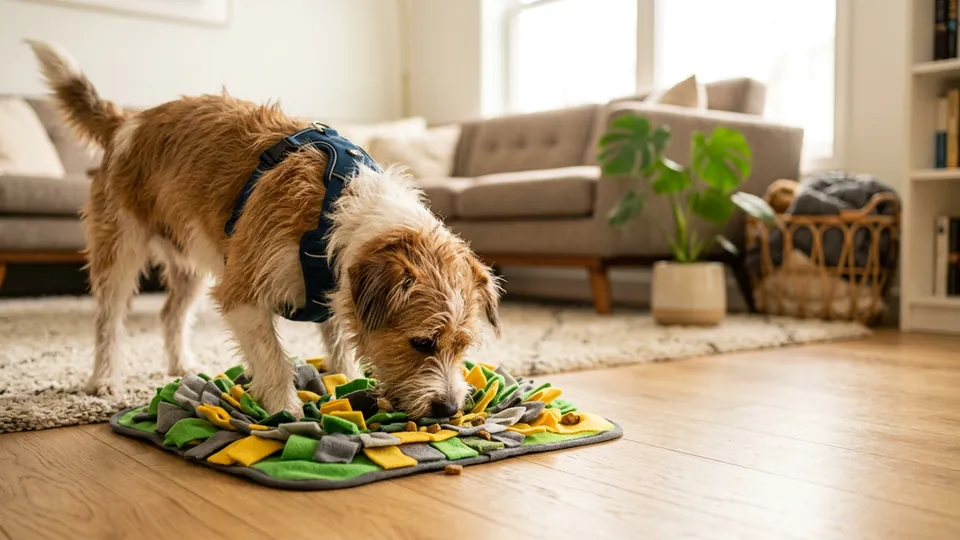
- Snuffle mat. Press treats into a fabric snuffle mat (shop-bought or made from fleece strips) so your dog has to nose through to find every piece.
- Towel rolls. Sprinkle kibble along a towel, roll it up loosely, and let your dog unroll it. Tighten the roll as their skills grow.
- The which-hand game. Hide a treat in one closed fist, present both hands, and let your dog sniff out the winner. A brilliant two-minute boredom buster anywhere.
Food Puzzles & DIY Toys
Turning mealtime into a puzzle slows fast eaters and keeps clever dogs busy. Many of these cost nothing.
- Stuffed and frozen Kong. Pack a rubber Kong with part of your dog's food, mashed banana, or wet food, then freeze it for a longer-lasting challenge.
- Lick mat. Smear something soft and safe across a lick mat — long, soothing licking is naturally calming for dogs.
- Muffin-tin puzzle. Drop a treat in each cup of a muffin tin, cover them with tennis balls, and let your dog work out how to move the balls.
- Homemade bottle or box puzzle. Hide kibble inside a cardboard box stuffed with scrunched paper, or a clean plastic bottle (lid and ring removed) — under supervision.
Tip: Treat-based games still count as food. Skim those treats from your dog's daily allowance — or build the games from their normal meal — so enrichment doesn't quietly tip them over their calorie target.
Chewing & Natural Behaviours
Chewing and digging aren't naughty — they're hardwired needs. Give them a legal outlet and the furniture stays intact.
- Appropriate long-lasting chews. Offer a safe, size-appropriate chew so your dog can gnaw to their heart's content. Always supervise and swap out anything small enough to swallow.
- A digging box or sandpit. Fill a box or shallow pit with soil, sand, or shredded paper and bury a few toys or treats — a wonderful outlet for keen diggers, and it saves your flower beds.
- A "destruction" box. Stuff a cardboard box with safe paper, smaller boxes, and a few hidden treats, then let your dog rip into it. Supervise and clear away the cardboard once they've won.
15 Guided Games, Timers Included
PupPlan includes 15 guided enrichment games across 7 categories, each with step-by-step instructions and a built-in timer so you know exactly what to do and when to stop. Pair them with the nutrition food database and calorie tracking, and every treat-based game stays neatly within your dog's daily target.


Training & Brain Games
Learning is enrichment too. Short, upbeat training sessions stretch the mind and strengthen your bond.
- Teach a new trick. Spin, paw, roll over, or "go to bed" — anything novel makes your dog think. Keep it force-free and reward generously.
- Name their toys. Give each toy a name and ask your dog to fetch the right one. Many dogs learn to recognise a surprising vocabulary, and it's a lovely rainy-day game.
- An indoor obstacle course. Use chairs, cushions, and a broom on two books to build a mini agility course, and guide your dog through with treats and praise.
Shaping games — where you reward tiny steps toward a goal, like one paw on a mat — are especially good brain-stretchers, and they teach your dog that experimenting pays off.
Sensory & Social Enrichment
The world itself is enrichment when you let your dog experience it on their terms.
- A "sniffari" walk. Slow right down and let the nose lead. Don't march for distance — let your dog read every lamppost and hedge. It's one of the most satisfying things you can offer.
- New safe places. A quiet car park, a different park, or a stroll through town gives a confident dog fresh sights, sounds, and smells.
- Novel textures and sounds. Let your dog walk over grass, gravel, and decking, or introduce gentle new sounds gradually so they stay positive experiences.
- Calm dog playdates. A relaxed meet-up with a well-matched, friendly dog offers social enrichment you can't replicate with toys.
How to Do It Safely
Enrichment should always be fun and never risky. A few simple rules keep it that way:
- Supervise food and toys. Stay nearby, especially with DIY puzzles, chews, and anything destructible, and step in before cardboard or plastic gets swallowed.
- Keep it size-appropriate. Choose toys and chews suited to your dog's size and chewing style to avoid choking hazards.
- Avoid toxic foods. Never use grapes, raisins, onions, chocolate, xylitol, or other foods that are toxic to dogs — stick to your dog's normal food and dog-safe treats.
- Count the treats. Build games from the daily food allowance, or subtract treats from it, so enrichment stays within your dog's calorie target.
- Start easy. Set the first version up to be winnable. Confidence builds when your dog succeeds, and an easy win keeps them keen to play again.
Mistakes to Avoid
- Making the puzzle too hard. A dog that can't crack it gives up or gets frustrated. Start simple and raise the difficulty as skills grow.
- Forgetting the calories. Treat games add up fast — adjust meals so the scales don't creep.
- Leaving destructible items unsupervised. Cardboard, bottles, and worn-out toys are fine with you watching, not when you pop out.
- Using enrichment to replace walks entirely. It complements exercise — most dogs still need to get out and move.
- Forcing it. If your dog is nervous of a new game or surface, go slower and keep it positive. Pressure is the opposite of enrichment.
Frequently Asked Questions
How much enrichment does my dog need each day?
A little every day beats one big weekend session. Even 10–15 minutes of sniffing or a food puzzle helps, because regular mental work matters more than one exhausting marathon. Match it to your dog's age and energy, and you'll often see calmer behaviour within days.
What can I use if I don't want to buy toys?
Most great enrichment is free. Scatter feed in the grass, roll treats in a towel, hide kibble in a cardboard box, freeze food in a yoghurt pot, or turn a muffin tin and tennis balls into a puzzle. Just supervise so your dog works the food out rather than eating the packaging.
Is enrichment a substitute for walks?
It complements them rather than replacing them — most dogs still need daily exercise. But sniffing and problem-solving can tire a dog more than a brisk walk, which makes enrichment invaluable when your dog is recovering from injury, the weather is bad, or you can't get out for long.
My dog destroys puzzle toys instantly — what should I do?
Supervise closely, choose tougher size-appropriate toys, and build the skill gradually so solving the puzzle is rewarding, not just shredding it. If chewing is the real goal, redirect it onto an appropriate long-lasting chew instead of the puzzle.