My Dog Won't Eat: Causes and What to Do
A dog turning up their nose at dinner is one of the most common worries owners bring to the vet — and it covers everything from harmless fussiness to a genuine medical emergency. The key is learning to tell the two apart. This guide walks you through the red flags that mean see a vet now, the likely causes, and what you can safely try at home when your dog is otherwise bright and well.
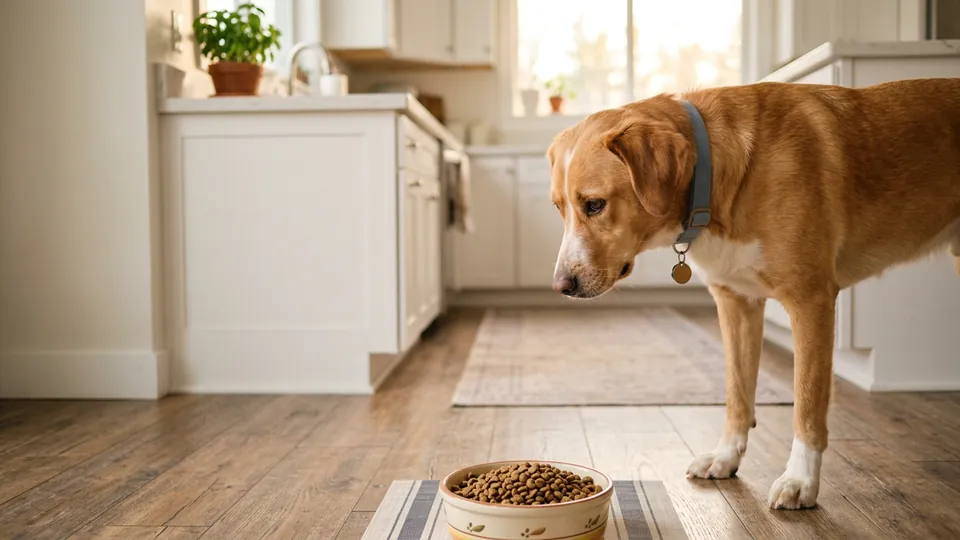
First: Is It Fussiness or Illness?
Before anything else, look at the whole dog, not just the bowl. There's a world of difference between a bright, playful dog who skips one meal and a dog who is off their food and flat, quiet, or being sick.
A dog who refuses breakfast but is still bouncing around, begging for a walk, drinking normally and behaving like themselves is usually telling you something fairly minor — they're not very hungry, they've had too many treats, or they simply fancy holding out. A dog who won't eat and is lethargic, vomiting, hiding, or trembling is a different situation entirely. The loss of appetite there is a symptom, not the problem.
So your first question isn't "how do I get them to eat?" — it's "how well is my dog in every other respect?" That answer decides whether you can sensibly wait and watch, or whether you need to pick up the phone.
Red Flags — See a Vet Now
Some signs mean appetite loss should not be managed at home. Treat the following as reasons to contact your vet promptly rather than waiting it out:
Warning: Call your vet without delay if your dog won't eat for more than 24 hours (much sooner — within a few hours — for puppies, small breeds, or diabetic dogs), or if appetite loss comes with any of these: repeated vomiting, diarrhoea, marked lethargy or collapse, a swollen or bloated belly, unproductive retching, obvious pain or whimpering, pale or grey gums, or difficulty breathing. A bloated, retching dog is a genuine emergency — go straight in.
A true loss of appetite (your vet may call it anorexia) is not the same as being a bit fussy. When it lasts, or arrives alongside other symptoms, it needs veterinary assessment. You know your dog's normal — if something feels wrong, trust that instinct and ring for advice. It's always better to be told it's nothing than to wait on a problem that was building.
Common Medical Causes
When a healthy dog suddenly stops eating, there's usually a reason, and many of them are medical. Only a vet can diagnose the cause, but it helps to know what they'll be considering:
- Dental pain. A cracked tooth, sore gums, or an abscess can make chewing genuinely painful. Dogs often want to eat but back away from the bowl.
- Nausea or an upset stomach. Anything from scavenging something they shouldn't have to a more serious gut problem can put a dog right off their food.
- Infections. A dog who feels unwell with an infection — anywhere in the body — will often lose interest in eating, just as we do.
- Pain elsewhere. Aching joints, an injury, an ear infection, or internal discomfort can all suppress appetite even when the mouth is fine.
- Medication or recent vaccines. Some medicines cause nausea, and it's common for a dog to be a little quiet and off their food for a day after a vaccination.
- More serious illness. Persistent appetite loss can be an early sign of organ, hormonal, or other significant disease — another reason not to ignore it when it lingers.
Non-Medical Causes
Plenty of meal refusals have nothing to do with illness. If your dog is otherwise well, one of these may be behind it:
- Stress and change. A new home, a change of routine, a new pet or person, building work, fireworks, or even hot weather can all dampen appetite for a while.
- Too many treats and table scraps. A dog filling up on extras simply isn't hungry at mealtimes — the bowl looks dull next to whatever they had earlier.
- Free-feeding leftovers. If food is left down all day, a dog grazing on it won't show much enthusiasm at any single meal.
- Food that's gone off. Stale kibble, rancid fats, or a damp, old bag can smell wrong to a dog long before it does to you.
- A new food they dislike. A recent switch of brand, flavour, or texture may simply not appeal.
- Being a natural grazer. Some dogs are genuinely light, picky eaters by temperament and always have been — which is different from a sudden change.
Track Appetite and Spot Patterns
PupPlan's nutrition food database lets you log meals with calorie tracking and a full feeding history, so a "won't eat" day becomes a data point rather than a guess. Activity logging records how much your dog actually eats over time, and weight tracking with trend charts shows the bigger picture — exactly the kind of record your vet wants to see.


What You Can Safely Try (Healthy Dog, No Red Flags)
If your dog is bright, well, drinking, and showing none of the warning signs above, it's reasonable to give them a gentle nudge before assuming a problem. Try these:
- Stick to a routine. Offer meals at the same times each day. Predictable mealtimes help build a predictable appetite.
- Pick up uneaten food after 15–20 minutes. Don't leave it down all day. A bowl that appears and disappears is more interesting than one that's always there.
- Cut the treats. For a day or two, stop the extras entirely so genuine hunger has a chance to build.
- Warm the food slightly. Gently warming wet food (never hot — test it first) releases its smell and can tempt a reluctant nose.
- Make sure water is fresh. Clean, accessible water always matters, especially in warm weather.
- Change foods gradually. If you're switching diets, mix the new food into the old over about a week so the change doesn't itself cause refusal or an upset tummy.
Tip: Resist the urge to bribe with constant toppers, gravy, or hand-fed chicken every time your dog hesitates. It feels kind in the moment, but it quietly teaches your dog that refusing the bowl makes something tastier appear.
Don't Accidentally Create a Fussy Eater
Here's the trap that catches loving owners. Your dog pauses at dinner, so you add a spoonful of something nicer. They eat. Brilliant. But your dog has just learned a lesson: hold out, and the food gets better.
Repeat that a few times — swapping flavours, adding toppers, switching brands the moment they hesitate — and you've trained a connoisseur who refuses plain food on principle, waiting for the upgrade they know is coming. The dog isn't being difficult; they're being logical.
Once you've ruled out medical causes with your vet, consistency fixes most of these picky eaters. Offer the meal, give it a fixed window, and pick it up if it's ignored — without drama or a parade of alternatives. A healthy dog will not starve themselves over a food they'll happily eat once genuine hunger returns.
Track It and Tell Your Vet
Whatever the cause, a written record is your most useful tool. Logging each meal — what you offered, how much your dog ate, and how they seemed — turns vague worry into clear patterns. Is this a one-off, a slow decline over a fortnight, or a sudden change overnight? Your memory will blur it; a log won't.
Pair appetite notes with weight over time, and you'll spot the trends that matter long before they'd be obvious by eye. When you do call the vet, you can hand them facts instead of guesses. And remember: a sudden change in appetite, in either direction, is always worth a phone call — even if your dog seems otherwise fine.
Frequently Asked Questions
How long can a dog go without eating?
A healthy adult dog may skip a meal or even a day without it being an emergency. But more than 24–48 hours, or any red flags, means call your vet. Puppies, small breeds and diabetic dogs need attention far sooner — within hours, not days.
My dog won't eat but is drinking and acting normal — should I worry?
That's less urgent than a dog who is off food and unwell. A bright, normal dog who's still drinking can usually be given a day while you try the gentle home steps. If it continues, or other signs appear, call your vet for advice.
Why has my dog suddenly become a fussy eater?
Often it's learned — dogs quickly discover that holding out brings tastier toppers or a food swap. Stress can do it too. But sudden pickiness can also mean dental pain or nausea, so rule out medical causes with your vet first.
Should I force-feed or hand-feed my dog?
Never force-feed — you risk choking and a lasting aversion to mealtimes. Offering food gently by hand now and then is fine to encourage a nervous dog. But if appetite loss persists or comes with other symptoms, see your vet rather than feeding through it.