How to Stop Your Dog Jumping Up on People
A dog launching at every guest is one of the most common manners problems — and one of the most fixable. Jumping up is almost always a friendly greeting: your dog wants to reach your face and grab your attention. So the fix isn't punishment. It's teaching your dog that four paws on the floor is what reliably earns the fuss. Here's the force-free plan.
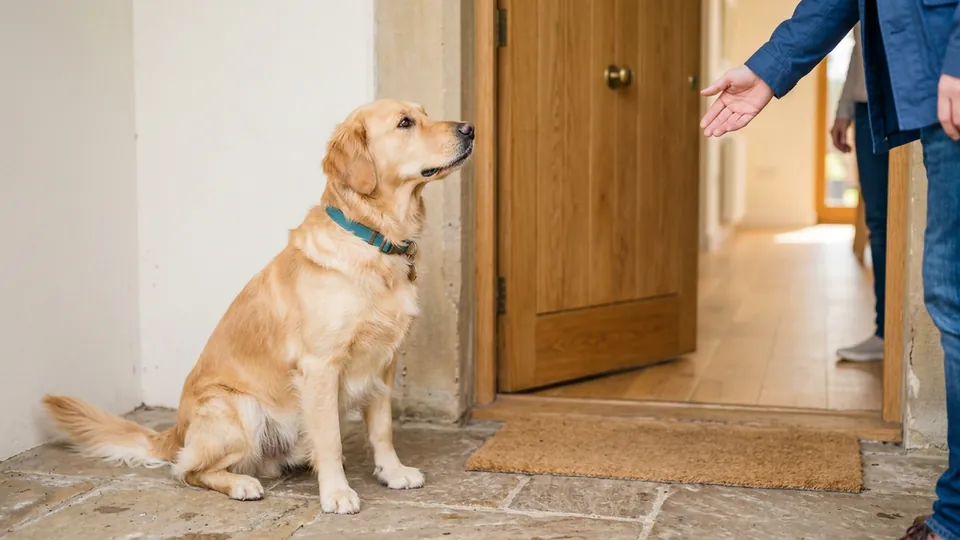
Why Dogs Jump Up
Dogs greet each other face to face. Our faces happen to be a long way up, so a dog who wants to say hello does the obvious thing — they reach for it. Puppies learn early that bouncing up at people produces smiles, hands, and chatter, and the habit sticks.
Here's the catch that trips up most owners: to an over-excited dog, any response counts as a win. Eye contact, talking, laughing, pushing them off — even a sharp "no!" or "down!" — all deliver the attention the jump was asking for. You think you're correcting your dog; your dog thinks the greeting worked. That's why scolding so often fails, and why kneeing, toe-stepping, or shouting are not only unkind but usually make an anxious dog warier and a bouncy dog no calmer.
The Core Rule: Attention Only for Four Paws Down
The whole method rests on a single, consistent rule: attention happens only when all four paws are on the floor.
- The instant your dog's front paws leave the ground, remove every scrap of attention. Turn away, fold your arms, look at the ceiling, and stay silent.
- The moment all four paws are back down, turn back and give calm, warm attention — a quiet "good", a gentle stroke, a treat.
- If they bounce up again, calmly turn away again. Down — attention. Up — nothing. Repeat.
Be boringly predictable. Your dog is running a quick experiment: does jumping still work? When the answer is consistently "no, but standing here does", the jumping fades on its own.
Tip: Turning away is information, not punishment. Keep it calm and silent — no dramatic huffing or telling-off, because drama is just more attention. Quiet, instant, every time.
Teach an Incompatible Behaviour
Removing the reward tells your dog what not to do. Now give them a better idea — a behaviour they physically can't do while jumping. A sit is perfect: a sitting dog cannot be airborne.
Practise a "greeting sit" away from the door first. Ask for a sit, then reward generously down at your dog's level — deliver the treat at knee height so their nose stays low and there's no reason to leap. Over many short reps, a sit becomes your dog's default way of saying hello. With a clicker you can mark the exact second their bottom hits the floor, which makes the lesson crystal clear.
Polite Greetings, Step by Step
PupPlan's Stop Jumping course walks you through the whole protocol in short, structured sessions — one of 21 training courses in the app. Use the built-in clicker to mark four-on-the-floor at the perfect moment, and let the Training Journey track your XP, levels, and daily streaks as the polite greeting becomes a habit.


Set Up Practice Greetings
You can't wait for real greetings to train — they're too rare and too exciting. Manufacture them instead, in calm conditions you control:
- Recruit a calm, briefed helper who understands the plan. Clip your dog onto a lead so you can quietly prevent the jump without yanking.
- Have your helper approach slowly. The moment your dog goes to leap, the helper stops and steps back; nothing happens.
- The instant your dog has four paws down (or offers a sit), the helper steps in and greets calmly and low.
- Reset to a few metres away and repeat. Reward that flicker of restraint heavily — that's the behaviour you're building.
Keep sessions short and end on a success. A few good reps a day beats one long, over-aroused marathon.
The Front Door Plan
The doorbell is peak excitement, so lead with management, not willpower. Set things up so your dog simply cannot rehearse the jump while they're still learning.
- Use a barrier. A baby gate or a lead keeps your dog off your guests while everyone settles.
- Send them to a station. Teach a mat or bed near (but not at) the door as a "go-to" spot. A dog lying on a mat isn't jumping on anyone.
- Brief your visitors. Ask them to ignore your dog entirely until they're calm — no eye contact, no greeting — then say hello quietly once paws are settled.
- Reward the settle. Calm behaviour at the door is gold. Mark and reward it so the doorway predicts "lie down and relax", not "launch".
Consistency Across Everyone
This is where most plans quietly fall apart. If you ignore the jumping but one family member ruffles your dog's ears mid-leap, your dog learns that jumping sometimes pays — and intermittently rewarded behaviour is the hardest of all to extinguish.
Get the whole household reading from the same script, and gently coach visitors too. The friend who says "oh, I don't mind!" while your dog scrambles up their coat is undoing days of work. One clear, shared rule — feet on the floor earns the fuss — applied by everyone, is what makes it stick.
For Big or Boisterous Dogs
A large or exuberant dog can knock over a child or an older guest, so safety comes first. Use a gate or a lead to prevent contact while you train, rather than relying on a half-learned sit in a high-stakes moment.
The principle doesn't change: never punish, just prevent the rehearsal. Every jump a powerful dog gets to practise makes the habit stronger and someone's safety thinner. Manage the environment so the jump can't happen, reward the floor relentlessly, and let the polite greeting become the only one your dog knows.
Common Mistakes
- Treating "no!" as a correction. To your dog it's attention — and attention is the reward. Stay silent and turn away instead.
- Greeting at full height. Reaching down to pat a jumping dog rewards the leap. Wait for four paws, then greet low.
- Being inconsistent. One person rewarding the jump teaches your dog to keep trying. Everyone follows the same rule.
- Skipping management. Letting your dog rehearse jumps on real guests between sessions overwrites your training. Use gates and leads.
- Punishing with knees, toes, or shouting. Aversives don't teach a better greeting; they erode trust and can make an anxious dog worse.
Frequently Asked Questions
Why doesn't saying "no" stop my dog jumping?
To an excited dog, almost any reaction is attention — and attention is what the jump was after. Talking, eye contact, even pushing them off all reward it. Remove your attention the instant paws leave the floor and give calm attention the moment they're back down; that teaches far more clearly than "no" ever will.
How do I stop my dog jumping on visitors specifically?
Manage first so your dog can't rehearse the jump: a lead, a baby gate, or a mat to settle on before you open the door. Ask visitors to ignore your dog until all four paws are calm, then greet low. Practise with briefed, calm helpers before testing it on excitable guests.
Is it too late to stop an adult dog jumping?
Not at all. Same plan — remove the reward, teach an incompatible sit, stay consistent. An adult who's practised jumping for years may take a little longer to overwrite the habit, but dogs of any age learn polite greetings.
My dog jumps because they're anxious, not excited — is this different?
Yes. Some dogs jump, paw, or cling out of worry rather than joy, and simply withdrawing attention can leave them more unsettled. Address the underlying worry, give them a calm station away from the doorway, and reward relaxed behaviour. If you see trembling, whining, or other stress signs, consider a qualified, force-free behaviourist.