Surviving the Teenage Dog Phase (Adolescence)
One week you have a polite, attentive puppy who sits on a whisper and comes when called. The next, you have a creature who stares straight through you, bolts after a leaf, and acts as though it has never heard the word "sit" in its life. Welcome to adolescence. It feels like everything has fallen apart — but it hasn't. Your dog is going through a completely normal stage of brain development, and with the right approach you'll both come out the other side just fine.
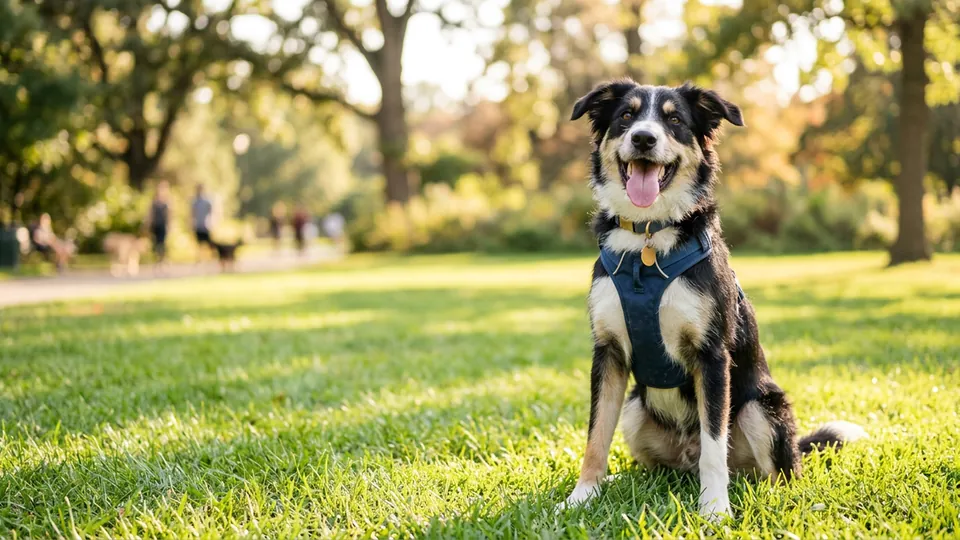
What's Happening to Your Dog's Brain
Dog adolescence roughly spans 6 to 18 months, though it varies with breed and size — small dogs often mature earlier, while large and giant breeds can stay teenagers well past their second birthday. Behind the scenes, your dog's brain is being rebuilt. The emotional, impulsive parts come fully online before the "think before you act" parts catch up, which is exactly why a teenage dog can know a cue perfectly and still fail to do it.
On top of that, hormones surge, the body grows faster than coordination can keep up with, and the world suddenly looks different. Things that were boring last month are now thrilling; things that were familiar can suddenly seem alarming. Your dog isn't being dominant, stubborn, or "testing you" — it is doing the canine equivalent of being a teenager, and it can't help it any more than a human fourteen-year-old can.
Why Training Seems to "Fall Apart"
The classic complaint is selective deafness: you call, your dog clearly hears you, and chooses the squirrel instead. This isn't defiance. During adolescence, distractions become more rewarding while impulse control dips, so the value of "come back to Mum" has to compete with a world that's never been more interesting.
You may also notice your dog appearing to "test boundaries" — ignoring cues that were rock-solid, pushing at routines, trying things on. Again, this is developmental, not a bid for power. And many dogs hit a second fear period somewhere in this window, where things they once took in their stride suddenly worry them. None of it means your training was wrong or wasted. The foundations are still there; they've just gone temporarily wobbly while the brain reorganises.
Don't Stop Training — Adjust It
The worst thing you can do right now is give up because "it's not working anyway". Adolescence is precisely when consistent, kind training pays off. The trick is to lower your expectations on purpose and meet your dog where it actually is today:
- Go back a step. If recall is falling apart in the park, practise it in the garden again. Rebuild from somewhere your dog can succeed.
- Raise your reward value. Boring kibble won't beat a squirrel. Bring out the good stuff — roast chicken, cheese, whatever your dog finds genuinely thrilling.
- Lower the difficulty temporarily. Fewer distractions, shorter distances, easier asks. Add challenge back gradually as your dog re-stabilises.
- Manage to prevent rehearsing. Every time your dog practises bolting, counter-surfing, or ignoring you, that habit gets stronger. Use baby gates, lead the dog past temptation, and set the environment up so the wrong choice simply isn't available.
Tip: Think "management plus training", not "training instead of management". Preventing a bad rehearsal today is worth ten corrections tomorrow — and it keeps the whole experience positive for both of you.
Protect Your Recall Above All
If you protect one skill through adolescence, make it recall — it's the one with safety on the line. Many lovely puppies lose their reliable recall around now, and the fix is to treat it as the priority, not to panic:
- Go back on a long line. A 5–10 metre training line lets your dog enjoy freedom while removing the option to disappear after something. It also stops the self-rewarding habit of running off.
- Re-charge the cue. Make coming back wildly worthwhile again with high-value rewards, games, and praise — so "come" predicts brilliant things, not the end of fun.
- Never punish a late return. If you tell off a dog that finally came back, you've just taught it that returning is risky. Reward every recall, even the slow, distracted ones.
For a full rebuild, work through our guide to training a reliable recall — the same protocol works beautifully for re-establishing a teenager's wandering recall.
Stay Consistent Through the Teenage Phase
PupPlan's dedicated Adolescent Challenges course walks you through this exact stage, while daily streaks and the Training Journey keep you accountable on the hard days when it's tempting to skip. Add 15 enrichment games to drain that teenage energy, and you've got a plan you can actually stick to.


Channel the Energy
An under-stimulated teenage dog will invent its own entertainment, and you almost certainly won't enjoy the result — shredded cushions, hole-digging, fence-running, and barking at nothing. The answer isn't to exhaust your dog with endless walks (over-exercising a growing body has its own risks); it's to satisfy both body and brain.
- Mental work tires dogs faster than miles. A short training session, a puzzle game, or a scatter-feed in the grass can settle a dog more than an hour of fetch.
- Let them sniff. A "sniffari" — a slow walk where your dog chooses where to nose around — is genuinely decompressing and tiring.
- Use enrichment. Snuffle mats, food puzzles, and games give the brain a proper workout. PupPlan's enrichment games are built for exactly these moments.
- Allow appropriate dog play. Calm, well-matched playmates help an adolescent burn energy and practise social skills — just steer clear of chaotic free-for-alls that wind them up.
Manage the Second Fear Period
Don't be surprised if your confident pup suddenly spooks at the bin that's always been there, or hesitates at a friend it used to adore. This second fear period is normal and usually passes. How you handle it matters, because frightening experiences now can leave a lasting mark.
- Never force it. Dragging your dog towards the scary thing teaches it that you can't be trusted to keep it safe.
- Build positive associations. Pair the spooky object or situation with treats and calm praise at a distance your dog is comfortable with.
- Give space and let your dog choose. Allow it to approach in its own time, or to walk away. Confidence comes back when your dog feels in control.
Keep Calm and Carry On
Here's the part to hold on to: the overwhelming majority of "problem" adolescents grow into lovely, well-mannered adults. The phase is temporary. The dog you're frustrated with this month is still the dog you fell for — it's just navigating a messy, necessary stage of growing up.
Stay consistent, stay kind, and keep the lessons short and winnable. Protect your relationship above any single behaviour, because a dog that trusts you will keep choosing you long after the squirrels lose their novelty. Carry on through the wobble, and you'll be rewarded with the steady, brilliant adult dog those foundations were always building towards.
Common Mistakes
- Taking it personally. Your dog isn't trying to dominate you or get one over on you — it's a developing brain, not a power struggle.
- Getting harsher. Punishment and aversives damage trust and can deepen fear during this sensitive stage. Be clearer, not tougher.
- Giving up on training. "It doesn't work any more" usually means the difficulty is too high — drop it down rather than stopping.
- Letting recall self-destruct. Allowing endless off-lead bolting rehearses exactly the habit you don't want. Go back on a long line.
- Under-stimulating, then over-exercising. Bored teenagers misbehave; over-walked growing joints suffer. Balance physical and mental enrichment instead.
Frequently Asked Questions
At what age do dogs go through adolescence?
Usually from around 6 months, easing off somewhere between 18 and 24 months. Small breeds mature faster; large and giant breeds stay teenagers longer. Treat these as a rough guide, not a hard deadline.
Why is my trained puppy suddenly ignoring me?
It's developmental, not spite. The brain is rewiring, distractions feel more rewarding, and impulse control dips. Reduce the difficulty, raise your reward value, and rebuild — the behaviour is still in there.
Will my dog grow out of this?
Almost always, yes. The catch is that habits rehearsed now can stick, so keep training and keep managing the environment. The dog you finish the phase with is largely the dog you practised through it.
Should I be stricter with a teenage dog?
No — be clearer and more consistent, not harsher. Adolescence isn't a power struggle, and punishment damages trust and can deepen fear. Calm, predictable, well-rewarded training works far better.